
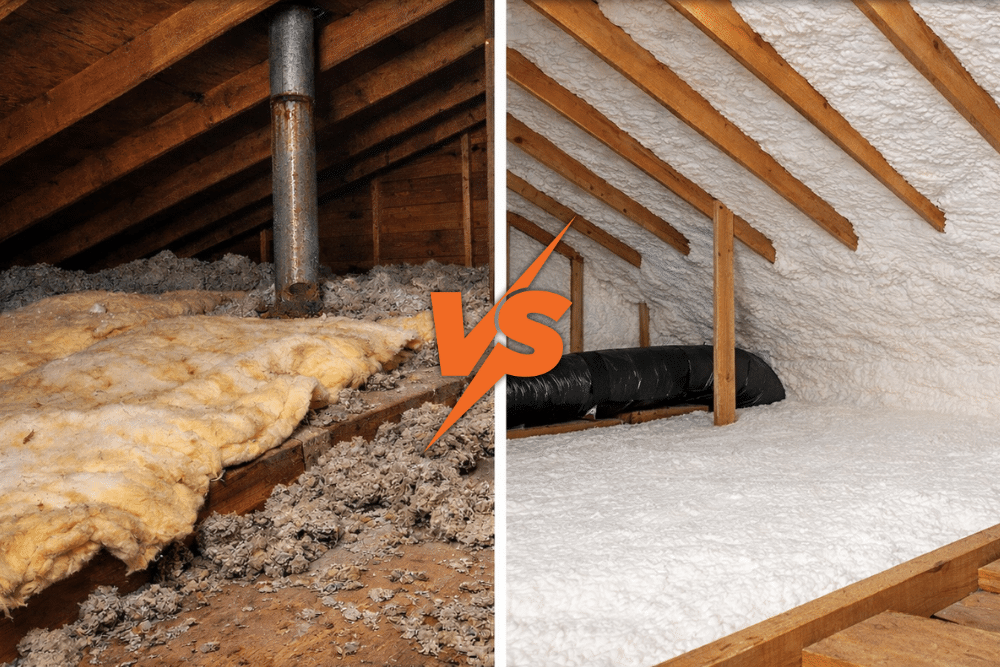
Across the Waterloo Region and Southern Ontario, many homes were built or last upgraded in the 1980s and 1990s. At the time, insulation systems met the expectations of building codes and homeowners alike. The challenge today is not that this insulation was poorly installed, but that insulation standards, materials, and performance requirements have evolved.
Homes are now expected to be more energy efficient, more airtight, and more consistent in how they manage heat. Insulation installed 30 years ago was not designed with those expectations in mind.
Insulation Standards Are Based on Performance, Not Age
Insulation does not have an expiration date, but it does have a performance threshold. Older insulation systems were built to slow heat transfer, not to actively control air movement or energy loss.
Modern standards focus on how insulation performs as part of the entire building envelope. This includes how well it seals gaps, adapts to framing movement, and maintains consistent coverage over time.
As standards have changed, many older insulation systems simply no longer meet what is expected for comfort, efficiency, and durability in Ontario homes.
Building Code Changes Have Raised the Baseline
Building codes today place greater emphasis on energy efficiency than they did three decades ago. Requirements for insulation depth, coverage, and continuity have increased, particularly in attics, roof assemblies, and exterior walls.
Older homes often contain insulation that technically exists but does not meet current minimums. Gaps around joists, electrical penetrations, and framing transitions are common in older systems and were not always addressed during original installation.
These gaps allow warm air to escape during winter and make it harder for heating systems to maintain stable indoor temperatures.
R-Value Expectations Are Higher Than Ever
R-value is a measure of resistance to heat flow. Thirty years ago, lower R-values were accepted as sufficient for most residential construction in Ontario.
Today’s standards require higher R-values, especially in attics where heat loss is most pronounced. Many older homes fall short of these benchmarks, even if insulation appears visually intact.
Loose-fill and batt insulation used decades ago can also settle or compress over time. This reduces effective R-value and creates uneven coverage, leading to cold spots and drafts.
Modern systems, including spray foam insulation services, are designed to deliver consistent thermal resistance while adapting to irregular surfaces and framing.
Air Sealing Is Now a Core Requirement
One of the most significant shifts in insulation standards is the focus on air sealing. Heat loss is not only about insulation thickness. Air movement through small gaps can account for a large portion of energy loss in older homes.
Thirty years ago, air sealing was not treated as a primary insulation function. As a result, many homes have insulation that slows heat transfer but allows uncontrolled airflow.
Modern insulation standards expect systems to limit both heat flow and air leakage. This is particularly important in attic spaces, where warm air naturally rises and escapes if not properly sealed.
Targeted roof and attic insulation upgrades are often where the largest performance gains can be made in older Ontario homes.
Older Materials Were Not Designed for Long-Term Stability
Insulation materials used in the past were not always designed with long-term performance in mind. Over time, gravity, moisture, and temperature fluctuations can affect how insulation behaves.
Common issues include settling, shifting, and compression. Even small changes in coverage can reduce overall effectiveness and create pathways for heat loss.
Modern insulation systems are engineered to maintain shape, adhesion, and coverage over decades. This stability plays a key role in meeting current performance standards.
Comfort Expectations Have Changed
Homeowners today expect more consistent indoor temperatures and fewer drafts than homeowners did 30 years ago. Comfort is no longer viewed as a luxury. It is an expected outcome of proper construction and maintenance.
Older insulation systems were rarely designed to deliver even temperature distribution throughout a home. Rooms above garages, upper floors, and finished basements are common problem areas.
Bringing insulation up to modern standards often improves comfort as much as it improves energy efficiency.
Energy Efficiency Is Measured Differently Today
Energy efficiency is now evaluated at a system level. Insulation is assessed alongside air sealing, ventilation, and moisture control.
Older insulation may still be present, but that does not mean it performs well when measured against today’s criteria. Modern assessments look at real-world heat loss rather than theoretical material ratings.
This approach helps homeowners understand where energy is being lost and which upgrades will provide meaningful improvement.
Why a Professional Assessment Matters
It is difficult to determine insulation performance based on age or appearance alone. A professional assessment compares existing insulation to current standards and identifies gaps that affect comfort and efficiency.
The goal is not to remove insulation unnecessarily, but to understand how the system performs today. In many cases, targeted upgrades are sufficient to bring a home closer to modern expectations.
This standards-based approach avoids fear-based messaging and focuses on clarity and informed decision-making.
Older Insulation Is Not a Failure, But It Is Often Outdated
Having insulation installed decades ago does not mean a home is unsafe or poorly built. It does mean the system reflects the standards of its time.
As building codes, materials, and expectations have advanced, many older systems no longer align with how homes are meant to perform in Ontario’s climate.
A professional review provides a clear comparison between past and present standards, allowing homeowners to plan upgrades based on facts rather than assumptions.
CTA: Book a professional insulation assessment with Reitzel Insulation to see how your home compares to today’s standards.
Contact Reitzel Insulation