
Many homes across the Waterloo Region and Southern Ontario were built before 1990. While these houses often have solid construction and lasting character, they also share something less visible: predictable heat-loss patterns created by older building practices.
The issue is not neglect or poor craftsmanship. It is that insulation standards, materials, and construction methods were very different before modern energy codes came into effect. As a result, many pre-1990 homes lose more heat than homeowners realize — even when insulation is present.
Pre-1990 Building Codes Focused on Structure, Not Efficiency
Before 1990, building codes prioritized structural safety and basic weather protection. Energy efficiency was not yet a central requirement in residential construction.
Insulation was typically installed to minimum levels, often without detailed attention to continuity or air sealing. Builders were not required to address small gaps, framing transitions, or air leakage points that are now known to significantly affect heat loss.
These practices were considered acceptable at the time, but they create long-term thermal weaknesses that remain hidden inside many older homes.
Common Heat-Loss Areas in Older Homes
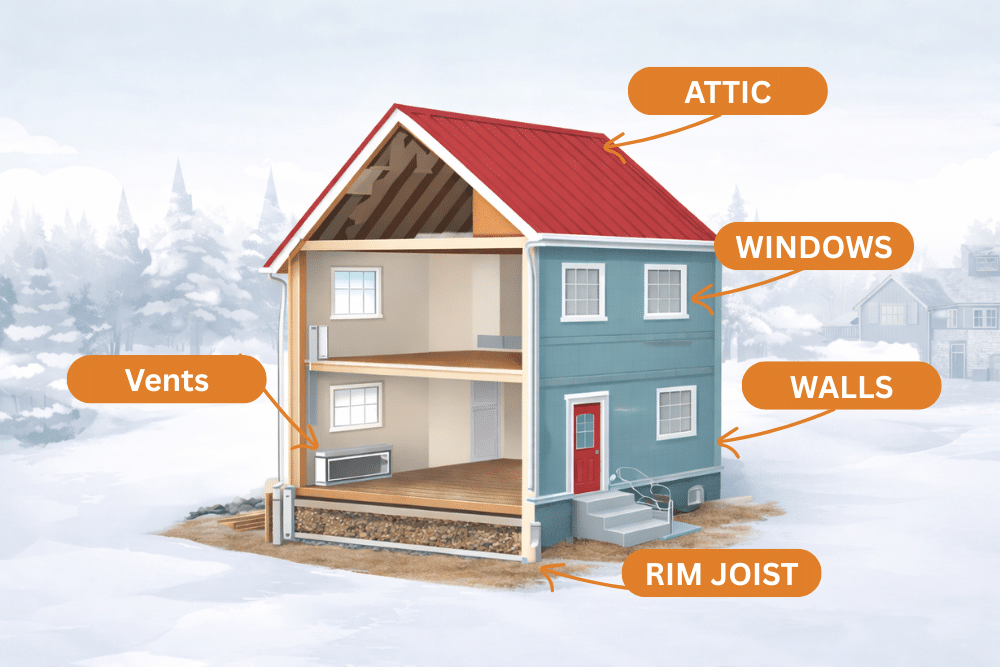
Homes built before 1990 tend to lose heat in similar places, regardless of layout or style. These areas were rarely detailed or sealed to modern standards.
Attics and rooflines are the most common source of heat loss. Warm air naturally rises, and older attic insulation often lacks sufficient depth or coverage by today’s expectations. Gaps around framing, vents, and access hatches allow heat to escape during winter.
Wall assemblies in older homes may contain insulation, but it is often uneven or interrupted by framing. Thermal bridging — where heat moves through wood framing instead of insulation — was not addressed in older designs.
Basement rim joists are another frequent problem area. These transition points were rarely insulated or sealed in pre-1990 construction, allowing cold air infiltration and heat loss.
Over time, these small losses add up, making homes harder to heat and less comfortable during colder months.
R-Value Gaps Are Common in Pre-1990 Homes
R-value standards have increased steadily over the past several decades. Insulation levels that were once acceptable no longer meet current expectations for Ontario’s climate.
Many pre-1990 homes fall short of modern R-value benchmarks, particularly in attic spaces. Even when insulation appears intact, it may not provide the resistance to heat flow required to maintain stable indoor temperatures today.
Older insulation materials can also settle, compress, or shift over time. This reduces effective R-value and creates uneven thermal performance across the home.
Air Leakage Was Not Properly Addressed
One of the biggest differences between pre-1990 construction and modern standards is how air movement is handled.
Older homes were not designed with comprehensive air sealing in mind. Insulation slowed heat transfer but did little to stop air leakage through cracks, joints, and penetrations.
Air leakage allows warm air to escape in winter and cold air to enter, increasing heat loss even when insulation is present. This is why some homes feel drafty despite having insulation in place.
Modern insulation standards treat air sealing as a core requirement, not an optional upgrade.
How Modern Spray Foam Addresses Pre-1990 Gaps
Modern spray foam insulation is often used as a corrective solution for older homes because it addresses both insulation and air sealing in one system.
Spray foam expands to fill gaps, cracks, and irregular framing areas that traditional materials cannot effectively seal. This helps reduce air leakage while delivering consistent thermal resistance.
In pre-1990 homes, spray foam is commonly applied in attic rooflines, rim joists, and other high-loss areas where older insulation systems fall short.
This approach focuses on improving performance where it matters most, rather than removing insulation that may still be serviceable elsewhere.
Attics Play an Outsized Role in Heat Loss
In many older homes, the attic is the single largest contributor to heat loss. Insufficient insulation depth, poor air sealing, and outdated installation methods combine to allow warm air to escape.
Upgrading attic insulation can significantly improve comfort and efficiency, especially when modern materials are used to seal air leaks as well as insulate.
Targeted roof and attic insulation upgrades are often the most effective first step for homes built before 1990.
Why Heat Loss Often Goes Unnoticed
Heat loss in older homes is gradual. It does not usually present as a sudden failure, which is why it often goes unnoticed for years.
Homeowners may adapt to colder rooms, higher heating costs, or uneven temperatures without realizing these issues are tied to outdated insulation standards.
A professional insulation assessment helps identify where heat is escaping and how the home compares to today’s performance expectations.
Assessment Before Assumptions
Not every older home needs a full insulation overhaul. Some areas may already perform reasonably well, while others fall far below modern standards.
A proper assessment looks at insulation coverage, air leakage, and thermal weak points. The goal is clarity, not unnecessary replacement.
This measured approach helps homeowners make informed decisions based on real performance rather than age alone.
Understanding the Era Helps Plan the Solution
Homes built before 1990 share construction-era characteristics that explain why heat loss is common. Understanding these patterns makes it easier to address them effectively.
Modern insulation solutions are designed to correct known weaknesses created by older building practices, bringing homes closer to today’s comfort and efficiency standards.
Schedule an insulation assessment to identify hidden heat loss in your home.
Contact Reitzel Insulation