
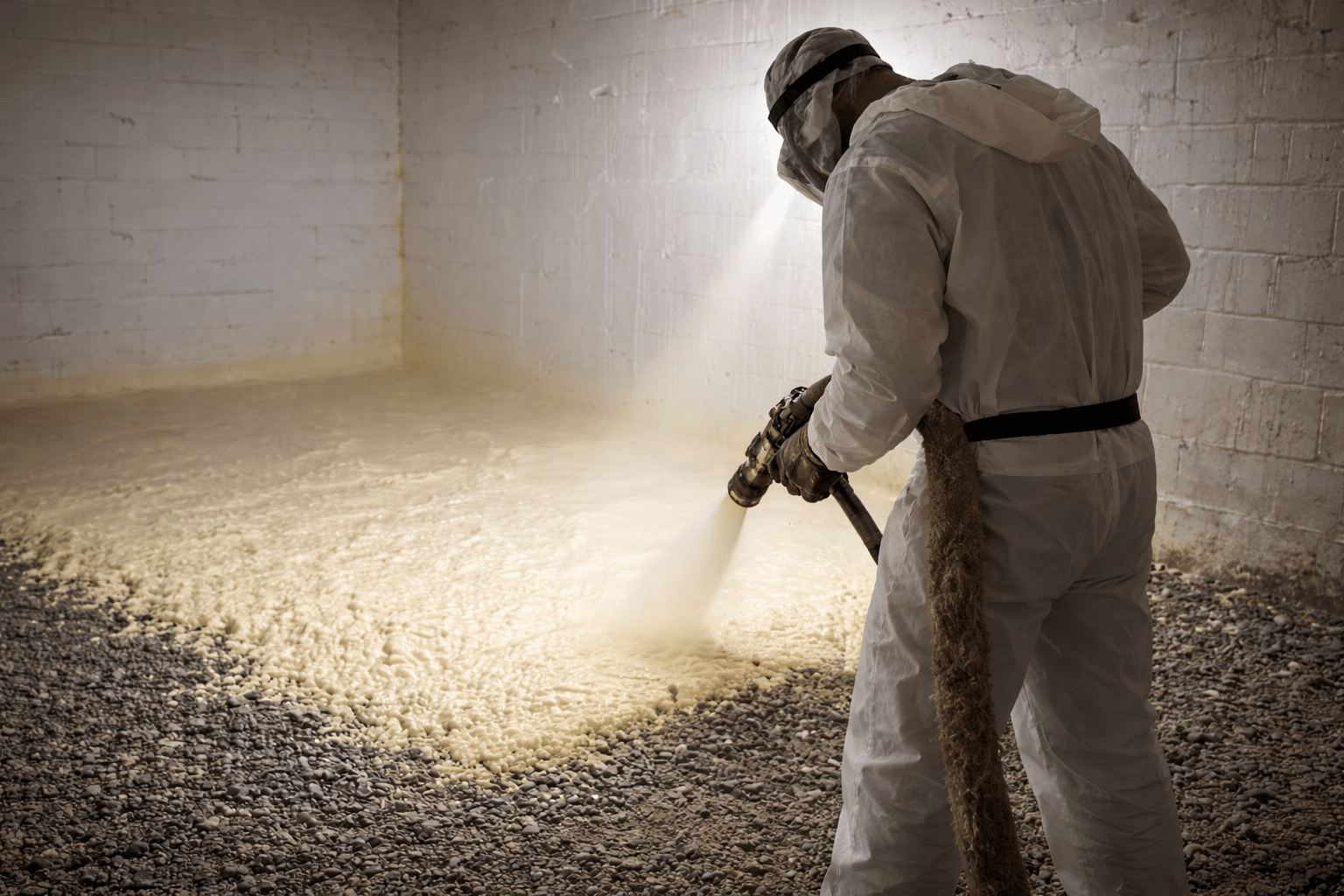
Slab insulation is often treated as a background detail in building design, but in Ontario, it is a performance-critical system. Beneath concrete floors, insulation directly affects comfort, energy stability, moisture behavior, and the slab’s ability to handle long-term loads without failure.
For builders, engineers, and facility managers across the Waterloo Region and Southern Ontario, slab insulation should be selected based on real-world use conditions. This includes traffic loads, equipment weight, and occupancy patterns, not just insulation value on paper.
Slab Insulation as a Performance System
Concrete slabs sit in constant contact with the ground. In uninsulated or poorly insulated assemblies, heat moves freely from the conditioned space into the soil below. This results in cold floor surfaces, increased heating demand, and uneven interior temperatures, especially during winter months.
Slab insulation acts as a thermal break. It limits heat transfer, stabilizes interior conditions, and reduces ongoing energy loss through the concrete floor. Over time, this improves occupant comfort and lowers strain on heating systems.
At the same time, slab insulation must perform structurally. Loads from vehicles, storage racks, machinery, and foot traffic are transferred through the slab and into the insulation layer. If the insulation cannot resist compression under these forces, it can deform. This deformation can lead to slab settlement, cracking, or uneven floor surfaces that are difficult to correct after construction.
An overview of how slab insulation systems are designed to address these conditions is available through Reitzel’s slab insulation systems.
When slabs are left uninsulated or under-insulated, they can also become a hidden source of energy loss. This issue is examined in more detail in our breakdown of when concrete floors become a heat loss problem in Ontario buildings.
Why Load Rating Matters Under Concrete Slabs
Not all insulation products are intended for use beneath load-bearing concrete. Load-rated slab insulation is engineered to maintain its shape and performance under sustained pressure.
In Ontario construction, load considerations often include:
- Vehicle traffic in garages and service areas
- Forklift and pallet jack movement in warehouses
- Fixed equipment or racking systems
- Long-term static loads in commercial and industrial buildings
Selecting insulation without adequate compressive strength can compromise both structural integrity and thermal performance. This is why slab insulation should always be matched to expected use conditions, not generalized building categories.
Application-Based Slab Insulation Selection
Rather than viewing slab insulation as a single product choice, it is more accurate to treat it as an application decision. Different environments require different load-rated solutions.
Heavy Traffic and Utility Applications
Areas such as parking garages, maintenance bays, and service corridors experience repeated traffic loads. These environments require insulation that can withstand ongoing movement without compressing or shifting.
HC-40 load-rated insulation is typically specified for these heavy traffic applications. It is designed to support moderate vehicle and equipment loads while still providing effective thermal separation beneath the slab.
Typical environments include:
- Residential and commercial garages
- Light industrial service areas
- Utility rooms with rolling equipment
Demanding Commercial Floor Conditions
Some commercial spaces place greater demands on slab assemblies. Mixed-use facilities, distribution zones, and commercial buildings with higher occupancy or equipment density require insulation with increased compressive resistance.
HC-60 slab insulation systems are used in these demanding applications where both load handling and long-term durability are essential. These systems help prevent insulation deformation while maintaining consistent floor performance.
Common uses include:
- Commercial loading zones
- Retail back-of-house areas
- Facilities with medium-duty material handling
Commercial and Industrial Load Environments
Industrial and high-load commercial buildings place the greatest stress on slab assemblies. Warehouses, manufacturing plants, and facilities with heavy static or dynamic loads require insulation engineered for sustained performance.
HC-100 commercial insulation solutions are specified in these environments to support significant loads over the life of the building. These systems reduce concrete floor heat loss while protecting against long-term compression and slab damage.
Typical applications include:
- Warehousing and logistics facilities
- Manufacturing floors
- Industrial processing spaces
Comfort and Building Performance Outcomes
While load performance drives insulation selection, comfort benefits are a direct outcome of proper slab insulation. Floors remain warmer and more consistent, drafts at ground level are reduced, and interior temperatures are easier to maintain.
From a building performance perspective, correct slab insulation also supports:
- Reduced thermal bridging
- Improved energy predictability
- Lower risk of moisture-related issues at the slab interface
- Greater durability of the concrete assembly
Incorrect slab insulation choices, by contrast, can lead to long-term performance failures. Once a slab is poured, insulation issues are extremely difficult to address without major disruption. This makes correct specification at the design and construction stage critical.
Slab Insulation in Ontario Construction Contexts
In the Waterloo Region and across Southern Ontario, slab insulation must account for seasonal temperature extremes, frost conditions, and varying soil environments. These regional factors increase the importance of matching insulation systems to actual building use rather than default specifications.
For commercial and industrial projects, slab insulation should always be evaluated as part of the overall load and performance strategy. Treating it as a cost-saving line item often leads to avoidable structural and comfort issues later in the building’s life cycle.
Speak with a Reitzel specialist to determine the right slab insulation for your building.
For project-specific guidance, contact Reitzel through their slab insulation consultation team.