
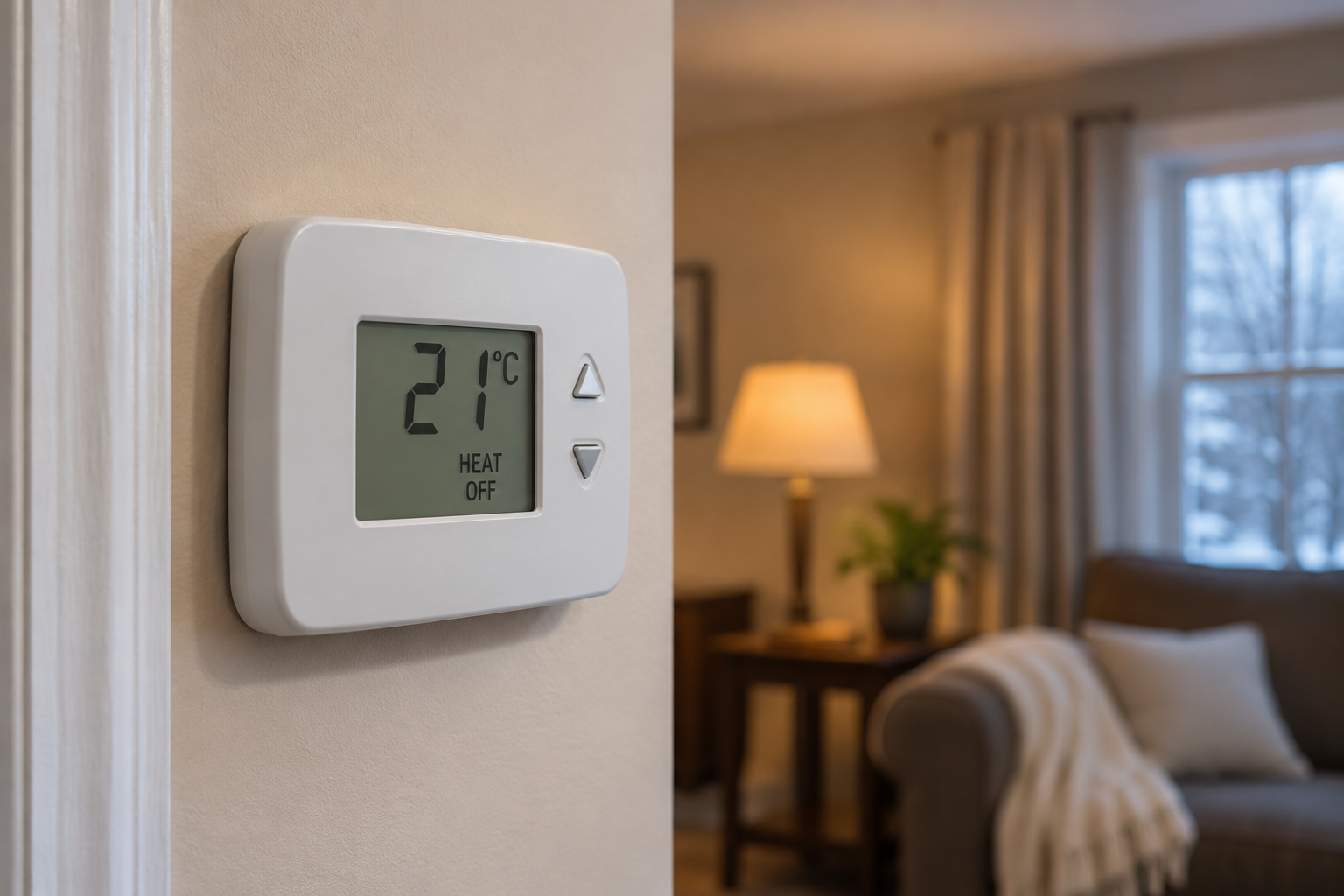
Your furnace reaches the thermostat setting, switches off, and everything seems comfortable. But shortly afterward, the house begins to feel cold again, even though the heating system was just running.
This can be frustrating for homeowners throughout Waterloo Region, Cambridge, Hamilton, Guelph, and Southern Ontario, particularly during colder months. You may wonder whether the furnace is running properly or whether your home is losing heat faster than it should.
When a house gets cold after heat turns off, several factors may be responsible. Insulation performance, uncontrolled air movement, cold interior surfaces, and heating-system operation can all influence comfort between heating cycles.
Understanding these differences is the first step toward identifying the actual problem.
What Happens to Your Home Between Heating Cycles
Your heating system operates in cycles, warming the home until the thermostat reaches its set temperature before switching off. As the indoor temperature changes, the thermostat eventually calls for heat again.
During the period between heating cycles, heat continues moving from warmer indoor spaces toward colder outdoor conditions.
This process occurs through the building envelope, including ceilings, exterior walls, floors, windows, and other surfaces separating heated spaces from their surroundings.
Insulation helps slow heat transfer, while air sealing limits uncontrolled airflow through gaps and openings.
Outdoor temperature, wind conditions, building materials, and the home’s thermal mass also influence how quickly indoor temperatures change. Thermal mass refers to the ability of materials within a home to absorb and release heat over time.
Some cooling between heating cycles is normal. However, when a house loses heat quickly or becomes uncomfortable shortly after the furnace stops, it may be worth investigating whether the building envelope or heating system is contributing to the problem.
Why Feeling Cold Is Not Always the Same as Losing Heat Quickly
One important distinction is that feeling cold does not necessarily mean the indoor air temperature has dropped significantly.
A thermostat measures temperature at its installed location. It does not directly measure the temperature of every wall, floor, window, or occupied area.
For example, a room may feel uncomfortable when nearby exterior walls or floors are noticeably colder than the surrounding air.
These cooler surfaces affect how your body exchanges heat with its surroundings. You may feel chilly even when the thermostat reading remains relatively stable.
Drafts can create a similar sensation. Air moving across your skin may make an area feel colder without a substantial change in the overall room temperature.
This means a homeowner who believes their house loses heat quickly may actually be experiencing localized discomfort rather than rapid cooling throughout the building.
Observing whether the thermostat temperature declines noticeably between heating cycles can provide useful context. However, a stable thermostat reading does not rule out comfort problems elsewhere in the home.
Distinguishing between measurable temperature decline and perceived discomfort matters because each condition may require a different solution.
How Insulation Gaps Affect Heat Retention
Insulation helps reduce heat transfer through the building envelope. However, its effectiveness depends on the material, installation quality, coverage, and condition.
Missing insulation, compressed materials, or inconsistent coverage can create areas where heat transfers more readily.
These insulation gaps may be located in ceiling assemblies, exterior walls, or other sections of the home.
When the furnace stops operating, areas with weaker insulation may develop colder interior surfaces than surrounding sections. These temperature differences can make certain spaces feel uncomfortable even before the overall indoor temperature changes significantly.
For homeowners noticing that their house gets cold after heat turns off, localized insulation weaknesses may contribute to the perception that warmth disappears quickly.
However, insulation alone does not determine how long a home retains heat. Air leakage, windows, outdoor conditions, building materials, and heating distribution also influence performance.
Identifying where insulation gaps exist is more useful than assuming additional insulation throughout the home will resolve the concern.
Why Air Leaks Can Make the Problem More Noticeable
While insulation slows heat transfer through building materials, air sealing addresses unwanted airflow through openings in the building envelope.
Small gaps around structural connections, service penetrations, and other openings may allow conditioned indoor air to escape or outdoor air to enter.
This uncontrolled exchange is known as home air leakage.
Between heating cycles, unwanted airflow can contribute to localized drafts and additional heat loss. Depending on pressure differences and outdoor conditions, air may move through openings even when the furnace is not actively heating.
A homeowner may notice cooler conditions near certain walls, floors, or transitions between building sections, despite little change in the thermostat reading.
Home air leakage can also increase heating demand because the heating system must replace heat lost through uncontrolled air exchange.
The relationship between insulation and air sealing is important. Insulation does not necessarily stop airflow through gaps, while air sealing alone does not provide the thermal resistance needed throughout a building assembly.
Both conditions may need evaluation when investigating home heat loss between heating cycles.
Where Heat Loss Problems May Be Hiding
When investigating why a house loses heat quickly, several parts of the building envelope may deserve attention.
Attic and ceiling assemblies: Inadequate insulation, gaps around penetrations, or interruptions in coverage may allow additional heat transfer through the upper building envelope.
Exterior walls: Missing or inconsistent insulation within wall cavities can create colder interior surfaces and contribute to localized discomfort.
Basement and rim joist areas: Connections between foundation walls and above-grade framing may contain insulation gaps or openings that allow unwanted air movement.
Transitions between building sections: Renovations, additions, and changes in construction methods can sometimes create areas where insulation or air sealing is less continuous.
These locations are not necessarily defective in every home. Their relevance depends on the building’s construction, condition, and observed symptoms.
A targeted assessment can help identify which areas warrant attention rather than treating every possible location as a confirmed source of heat loss.
When the Heating System May Be the Actual Issue
Not every comfort problem between heating cycles originates with insulation.
Thermostat placement, settings, or operation can influence when the heating system starts and stops. A thermostat located in a warmer area may not accurately reflect conditions elsewhere in the home.
Heating distribution can also affect comfort. Restricted airflow, ductwork problems, or uneven heat delivery may leave some rooms cooler than others.
Equipment operation and system performance should also be considered, particularly if heating cycles seem unusually short, temperatures fluctuate unexpectedly, or the furnace struggles to maintain the selected temperature.
If these symptoms are present, a qualified HVAC professional can evaluate the heating equipment, controls, and airflow.
This distinction is important because improving insulation will not necessarily correct a thermostat problem or mechanical heating issue.
How to Determine Whether Insulation Is Part of the Problem
When a house gets cold after heat turns off, identifying the cause requires more than assuming the home needs additional insulation.
A building-envelope assessment can help examine insulation coverage, potential air leakage locations, and areas where thermal performance may be inconsistent.
For concerns involving the upper building envelope, Reitzel Insulation’s Roof or Attic insulation services provide a relevant starting point for discussing attic conditions.
Where exterior wall performance may contribute to discomfort, the home’s interior and exterior wall insulation may also warrant evaluation.
Depending on the construction and identified conditions, spray foam insulation may be an appropriate option for certain insulation and air-sealing applications.
However, spray foam is not automatically the correct solution for every home. Material suitability depends on the affected building assembly, moisture considerations, and the specific issue being addressed.
A diagnosis-first approach helps determine whether targeted insulation improvements, air sealing, HVAC evaluation, or a combination of measures is appropriate.
Improve Comfort by Addressing the Actual Cause
If your home becomes uncomfortable shortly after the furnace stops, the most important question is whether indoor temperatures are actually declining rapidly or whether cold surfaces, drafts, and uneven heating are affecting comfort.
A house that loses heat quickly may have building-envelope weaknesses, but the heating system and thermostat should not be overlooked.
Understanding the cause allows homeowners to make informed decisions rather than investing in improvements that may not address the problem.
Evaluating insulation continuity, possible air leakage, and heating performance can help establish which areas deserve attention before repairs are selected.
If your home becomes uncomfortable soon after the heating system stops, contact Reitzel to discuss whether insulation or air leakage may be contributing to the problem.