
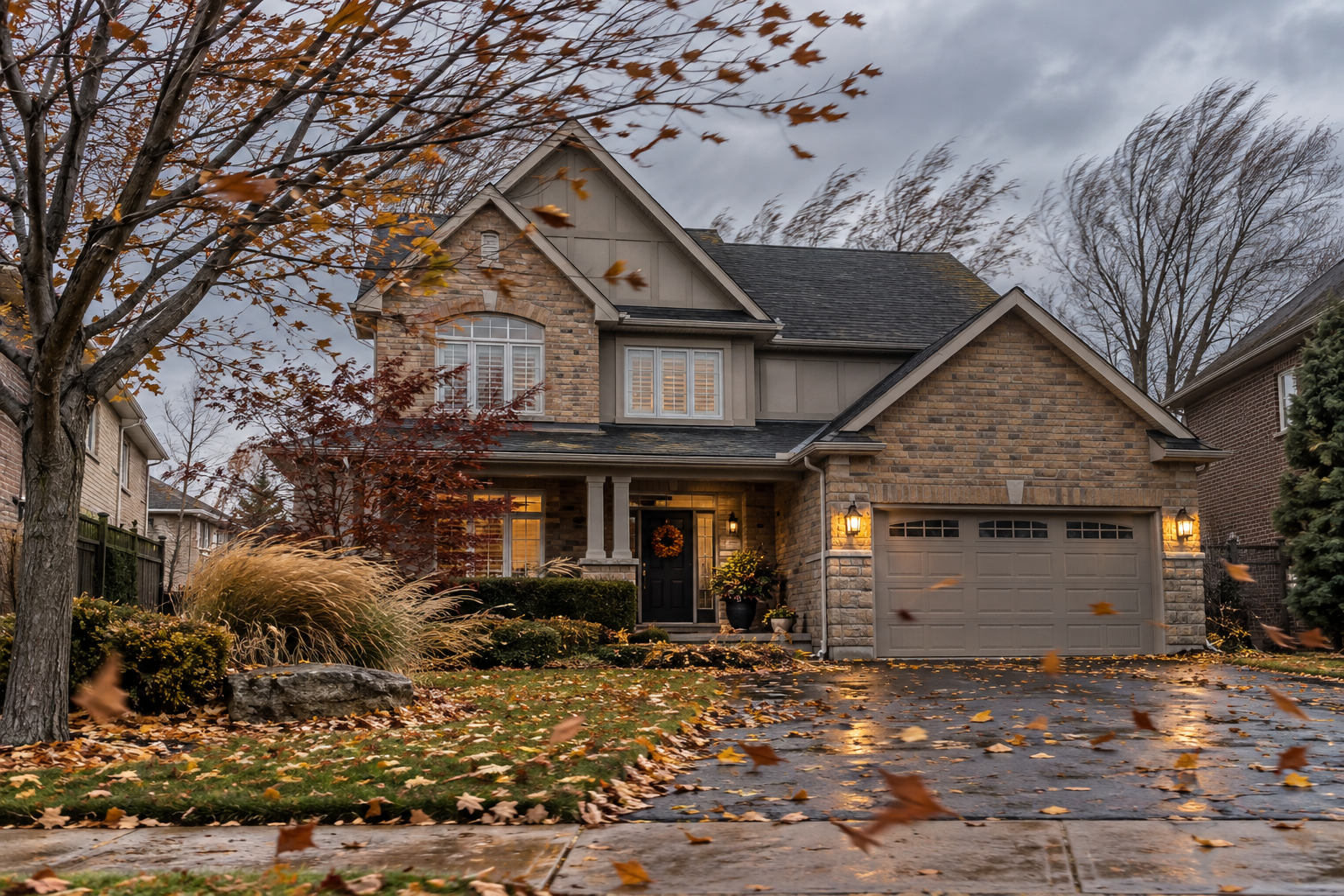
If your home feels colder on windy days even though the thermostat setting has not changed, the weather may be revealing weaknesses in the building envelope. Wind can make small gaps and poorly sealed areas much more noticeable by increasing the movement of outside air through the structure.
That does not automatically mean your home needs more insulation. The important questions are where the air movement is occurring, why it becomes more noticeable during windy weather, and what part of the building assembly needs attention.
Why Wind Can Change How Your Home Feels
Wind creates pressure differences around a house. Air is pushed against some sides of the building while lower-pressure areas form on others.
If the building envelope has gaps, those pressure differences can increase unwanted air movement. Outside air may enter through one area while heated indoor air escapes through another.
This helps explain why a home can feel comfortable on a calm day but noticeably cooler when the wind picks up. Existing weaknesses may be present in both conditions, but stronger wind can make their effects easier to feel.
Homeowners may notice cold drafts in the house, cooler exterior walls, certain rooms becoming uncomfortable, or heating equipment running more frequently. These symptoms do not identify the exact cause on their own, but they can point to areas that deserve further investigation.
Where Outside Air Can Find Its Way Into a Home
Air leaks in a house are not limited to obvious locations such as windows and doors. A building contains many joints, penetrations, and transitions where materials meet, and some can become pathways for uncontrolled air movement.
Rim joists are one potential example. This area sits around the perimeter of the floor system and can contain multiple joints and connections that may allow outside air to enter if they are not properly sealed.
Plumbing, electrical wiring, ventilation components, and other utility penetrations can also create openings through the building envelope. Even relatively small gaps can become more noticeable when wind pressure increases.
Transitions between additions and original construction may require attention as well. When a home has been expanded or renovated, different construction methods and materials can meet in ways that affect air control.
Attic penetrations are another possible source. Openings around wiring, pipes, fixtures, and other components can allow air to move between conditioned living space and the attic. Where attic conditions are contributing to the problem, the existing roof or attic insulation and air-sealing details may need to be assessed together.
Why Insulation Alone Does Not Always Stop Air Movement
Insulation and air sealing are related, but they perform different functions.
Insulation primarily helps slow heat transfer through building assemblies. Air sealing is intended to reduce uncontrolled movement of air through gaps and openings.
This distinction matters when your home feels colder on windy days. Simply adding more insulation does not necessarily correct an air leakage pathway if the underlying opening remains.
Different insulation products and installation methods can also perform differently. Some systems may provide both insulating and air-sealing characteristics when installed in suitable locations, while others are primarily intended to resist heat flow.
For certain applications, spray foam insulation may be considered where both thermal performance and air control are relevant. However, the correct solution depends on the location, construction, moisture conditions, and reason for the air movement.
How Insulation Gaps Can Make the Problem Worse
Insulation gaps can contribute to localized cold areas even when the rest of the assembly performs reasonably well.
Insulation may be missing in some cavities, compressed, disturbed by previous work, or installed inconsistently. Renovations and repairs can also affect insulation that was originally present.
During calm weather, these weak spots may not be obvious. When wind increases outside air movement around the building, the temperature difference near those areas can become more noticeable.
A homeowner might feel a section of wall becoming colder, notice one room cooling faster than others, or experience cold drafts in the house near a particular area. These symptoms may involve air leakage, insulation gaps, or a combination of both.
Exterior walls are especially important because they separate the conditioned interior from outdoor conditions. If wall performance is part of the concern, an assessment of the home’s interior and exterior walls can help determine whether insulation, air leakage, construction details, or another factor is involved.
Why Older Homes May Make the Problem More Noticeable
Some older homes were built using materials and construction methods that differ from modern approaches to insulation and air control. Over time, renovations, additions, repairs, and mechanical upgrades may also change how the building envelope performs.
That does not mean every older home has a significant air leakage problem. Many have received substantial upgrades, and two homes of similar age can perform very differently.
However, multiple generations of construction can create complicated transitions. An original wall may connect to a newer addition, an attic may contain several layers of previous work, or utility installations may have created new penetrations over time.
These conditions can help explain why a home feels colder on windy days even if it generally performs well under calmer conditions. Wind pressure can expose a particular weak point that is otherwise difficult to notice.
How to Find the Actual Source of the Problem
The most useful next step is diagnosis rather than assuming that additional insulation will solve the issue.
A building-envelope assessment can help identify where outside air is entering and where conditioned air may be escaping. It can also help determine whether the issue involves home air leakage, inadequate insulation, insulation gaps, or another part of the building assembly.
The location of the symptom is not always the same as the location of the source. Air can move through cavities and connected spaces before becoming noticeable inside a room.
That is why a cold wall, draft, or uncomfortable corner should be treated as a clue rather than a complete diagnosis. Understanding the actual air pathway can prevent unnecessary work and help direct upgrades toward the area that needs them.
When an Insulation Upgrade Can Help
An insulation upgrade may be beneficial when an assessment identifies areas with inadequate or poorly performing insulation. Air-sealing work may also be appropriate where gaps are allowing uncontrolled air movement.
The right approach depends on the specific building assembly. In some locations, insulation and air-sealing improvements may be addressed together. In others, a separate repair or building-envelope correction may need to happen first.
If your home feels colder on windy days, the goal should not be to choose an insulation product before understanding the problem. It should be to identify the weak area, determine how wind is affecting it, and then select an appropriate solution for that part of the home.