
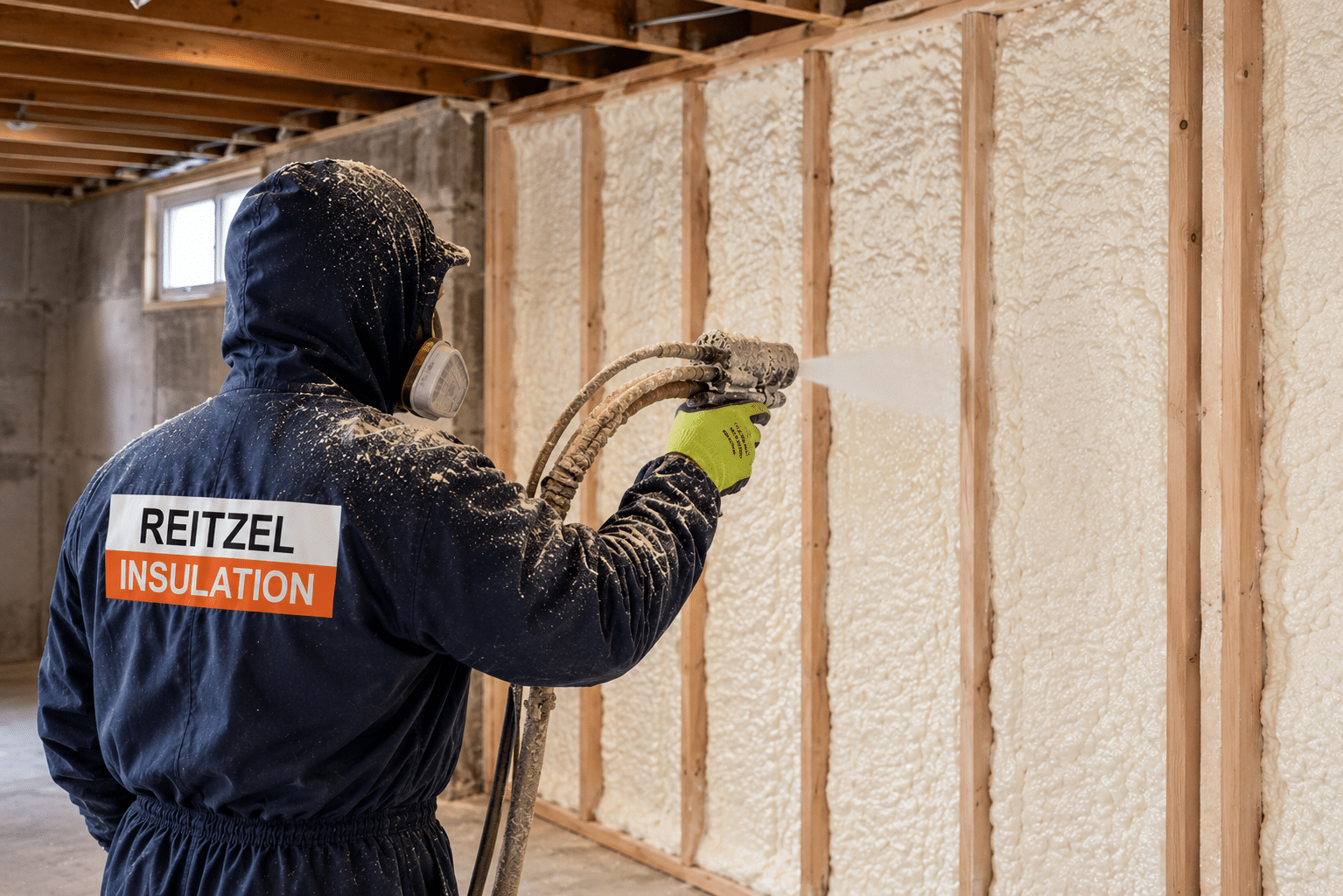
Basements in Ontario homes are exposed to unique conditions that can affect comfort, energy efficiency, and long-term building performance. Cold winters, humid summers, and fluctuating ground temperatures place constant pressure on foundation walls and lower-level spaces. When basement insulation is outdated or incomplete, homeowners may notice drafts, cold floors, damp conditions, and uneven temperatures throughout the home.
For many properties in Waterloo Region and Southern Ontario, spray foam insulation is used as a practical solution for addressing these issues. Spray foam insulation basement walls systems help combine insulation, air sealing, and moisture resistance into a single application. Rather than serving as a cosmetic upgrade, spray foam insulation is often selected to improve how the building envelope performs over time.
Because basement environments differ from above-grade living spaces, insulation products must perform under conditions that involve both heat transfer and moisture exposure. Properly installed spray foam insulation basement walls applications can help improve indoor comfort while supporting long-term durability in below-grade areas.
Why Basement Walls Lose Heat in Ontario Homes
Basement heat loss is common in many Ontario homes, particularly older properties built before modern insulation standards became common. Concrete foundation walls naturally conduct heat, allowing warmth from inside the home to transfer into the colder surrounding soil during winter months.
This heat transfer can create cold basement walls that affect the overall comfort of the home. Even when upper floors are adequately heated, basements may still feel damp or noticeably cooler because of poor insulation performance below grade.
In many homes, foundation walls contain little or no effective insulation. Older fiberglass systems may also leave gaps around framing, pipes, or rim joists where cold air enters more easily. These openings allow uncontrolled airflow that contributes to drafts and inconsistent temperatures.
Basement wall insulation Ontario homeowners install today is often intended to improve both thermal performance and air leakage control. This is particularly important in homes where the basement is used as living space, storage space, or a finished recreational area.
Spray foam insulation basement walls applications perform well in these conditions because the material expands directly against concrete, wood framing, and irregular surfaces. The foam fills small cracks and gaps that traditional insulation products may leave exposed.
Reducing basement heat loss may also help improve comfort on upper levels of the home. Floors located directly above poorly insulated basements often feel colder during winter because heat is escaping downward through the building structure.
How Spray Foam Insulation Helps Reduce Air Leaks
One of the primary advantages of spray foam insulation in basement environments is its ability to support air sealing while insulating at the same time. Many traditional insulation products are designed mainly to slow heat transfer but do not effectively block airflow.
Air leakage is a major issue in basements because foundation walls often contain multiple penetrations and structural transitions. Rim joists, utility openings, framing connections, and small cracks around concrete surfaces can all allow outside air to enter the home.
When spray foam insulation basement walls systems are installed professionally, the expanding foam adheres directly to surfaces and creates a continuous barrier. This helps reduce uncontrolled airflow and improves temperature stability throughout the basement.
Air sealing also contributes to improved energy efficiency. When heated indoor air escapes through foundation gaps, heating systems must work harder to maintain comfortable temperatures. Reducing this airflow may help improve overall indoor consistency during Ontario winters.
Spray foam basement walls systems are commonly used in unfinished basements where exposed framing and foundation walls allow installers to identify problem areas more effectively. In finished basements, spray foam may also be applied during renovation projects before new wall systems are completed.
Many homeowners choose to improve insulation performance throughout the home at the same time. In addition to basement upgrades, some properties may benefit from improved roof or attic insulation services to address additional areas of heat loss.
Because spray foam insulation basement walls applications combine thermal resistance with air sealing performance, they are often considered an effective solution for Ontario climate conditions.
Why Moisture Resistance Matters in Basements
Moisture control is one of the most important considerations when selecting basement wall insulation Ontario homeowners can rely on long term. Basements naturally experience more humidity exposure than above-grade areas because they are surrounded by soil and located below ground level.
When warm indoor air contacts cold foundation walls, condensation can form on surfaces. Over time, excessive moisture may contribute to damp conditions, musty smells, or deterioration of certain building materials.
Spray foam insulation in basement spaces helps reduce direct air movement against cold concrete surfaces, which may help support condensation prevention. Limiting airflow and improving thermal separation can reduce the conditions that allow moisture to accumulate within wall assemblies.
Closed-cell spray foam insulation is commonly selected for basement environments because of its dense structure and moisture-resistant properties. Unlike some traditional insulation materials, properly installed spray foam does not easily sag or absorb moisture under normal conditions.
This makes spray foam basement walls systems useful in areas where moisture control and long-term durability are important priorities. By creating a tighter building envelope, spray foam may help improve indoor comfort while supporting more stable environmental conditions within the basement.
Homeowners should still understand that insulation alone cannot solve active water intrusion problems. Issues such as foundation cracks, drainage failures, or exterior water penetration should be addressed before beginning insulation work.
A professional insulation assessment can help determine whether the basement environment is suitable for spray foam installation and whether additional moisture management improvements may be recommended.
How Spray Foam Improves Basement Comfort
Cold basement walls and drafts can make lower-level spaces uncomfortable for much of the year. Even finished basements may feel chilly during winter if insulation performance is inadequate around foundation walls and rim joists.
Spray foam insulation basement walls applications help improve comfort by creating a more continuous thermal barrier throughout the space. Reducing air movement and improving insulation coverage may help basements maintain more stable indoor temperatures during seasonal weather changes.
Homeowners often notice improvements in:
- Temperature consistency
- Reduced drafts
- Less cold air near foundation walls
- Improved comfort on basement floors
- Better year-round usability of lower-level rooms
Basement heat loss can also influence comfort throughout the rest of the home. Cold lower levels may contribute to uneven temperatures between floors, particularly during periods of extreme winter weather.
Spray foam insulation in basement spaces may help reduce this imbalance by limiting heat transfer through foundation assemblies. This can contribute to a more comfortable indoor environment without relying solely on increased heating output.
Because spray foam adheres directly to irregular framing and concrete surfaces, it performs well in many older Ontario homes where construction conditions vary from one section of the basement to another.
When Homeowners Should Consider Upgrading Basement Insulation
There are several signs that basement wall insulation Ontario homeowners currently have may no longer be performing effectively.
Common indicators include:
- Cold basement walls during winter months
- Drafts near rim joists or foundation areas
- Uneven temperatures throughout the home
- Persistent dampness or humidity
- Condensation on foundation surfaces
- Increasing heating demands
- Uncomfortable basement living spaces
Homeowners planning basement renovations often choose to upgrade insulation before installing finished walls, flooring, or ceilings. Addressing insulation and air sealing early can help improve long-term building performance and reduce the likelihood of future comfort issues.
Spray foam basement walls systems are frequently recommended for homes where moisture control, air leakage, and basement heat loss are all contributing factors. However, the appropriate insulation strategy depends on the condition of the home and the goals of the project.
Homeowners interested in improving basement comfort and overall energy efficiency can contact Reitzel Insulation to schedule a professional insulation assessment. Spray foam insulation can help support better air sealing, moisture control, and long-term building performance when installed properly for Ontario climate conditions.