
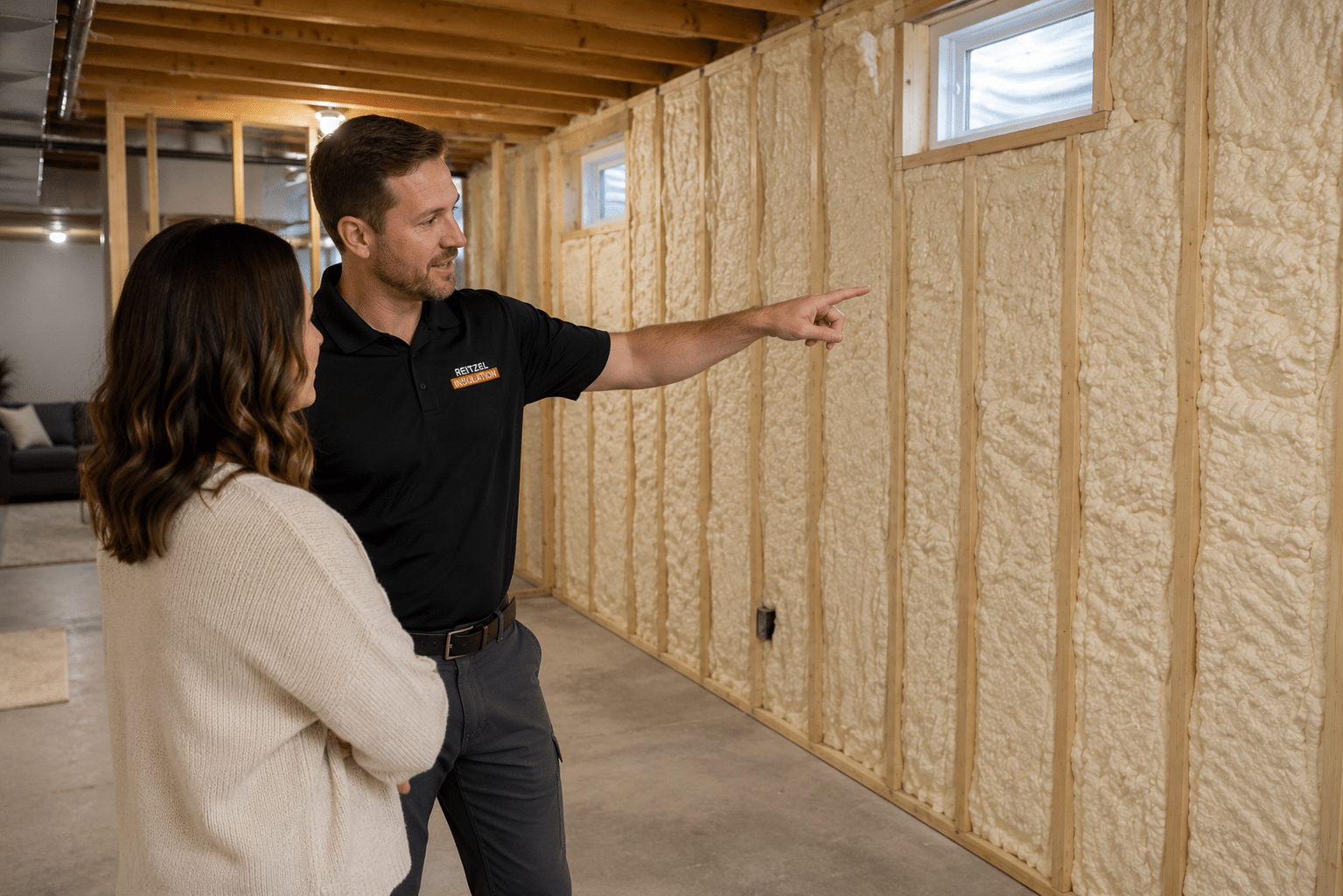
A basement renovation is one of the most effective ways to add usable living space to a home. Whether you are creating a family room, home office, fitness area, or guest suite, it is easy to focus on flooring, drywall, lighting, and paint before thinking about what goes behind the finished walls.
Planning your spray foam insulation strategy early can make a significant difference in comfort, moisture management, energy efficiency, and the long-term performance of the space. By considering basement insulation before finishing the project, homeowners can make informed decisions that help reduce future disruptions and avoid unnecessary renovation costs.
Why Insulation Should Come Before Drywall
The best time to evaluate insulation is before framing and drywall are complete. Once walls are closed, accessing foundation walls becomes much more difficult and expensive. That means changes to the insulation strategy often require removing finished materials that were recently installed.
Planning basement insulation before finishing gives homeowners the opportunity to assess the condition of foundation walls, identify areas where air sealing may be beneficial, and determine how the basement will be used throughout the year. A recreational room, rental suite, or home office may all have different comfort expectations, making early planning especially valuable.
Proper insulation is also an important part of protecting the building envelope. By reducing unwanted air movement and supporting moisture control, the right insulation strategy can contribute to a more consistent indoor environment while helping heating and cooling systems operate more efficiently.
Every home is different. Factors such as the age of the property, existing construction, and moisture conditions should all be considered before selecting an insulation solution.
Common Basement Renovation Mistakes
One of the most common renovation mistakes is assuming insulation can be addressed after most of the construction work is complete. While it is technically possible, doing so often limits available options and can increase labour costs.
Another frequent issue involves renovating over older insulation without evaluating its condition. Existing materials may have been damaged by moisture, age, or previous renovations. In some situations, removing outdated insulation before installing new materials creates a better starting point for the renovation.
If existing insulation needs to be removed, planning for insulation removal before construction begins can help ensure the new insulation system performs as intended.
Homeowners should also avoid assuming every basement requires the same insulation solution. Variables such as wall construction, humidity levels, and the intended use of the finished basement all influence the most appropriate approach. Careful planning allows those decisions to be made before drywall limits access.
How Spray Foam Helps Protect Finished Basements
When it is appropriate for a project, spray foam basement insulation offers several characteristics that make it well suited for basement environments.
One of its primary advantages is its ability to support effective air sealing while insulating at the same time. Reducing unwanted air movement around foundation walls can contribute to improved comfort throughout the finished basement and help minimize drafts.
Moisture control is another important consideration during any home renovation. While insulation alone is not a solution for water intrusion, selecting the right insulation strategy early can support better long-term performance when combined with proper basement design and moisture management practices.
Choosing basement insulation before finishing also helps coordinate insulation installation with framing, plumbing, electrical, and HVAC work. This planning can reduce scheduling conflicts and lower the likelihood of needing to reopen finished walls later.
For many homeowners, finished basement insulation is not simply about improving today’s comfort. It is also about protecting the investment made in flooring, drywall, trim, and other finished materials for years to come.
Planning for Long-Term Comfort and Efficiency
A successful basement renovation insulation plan considers the entire life of the renovated space rather than just the construction phase.
Questions worth asking include:
- How will the basement be used during every season?
- Are there areas where additional air sealing could improve comfort?
- Has the condition of the foundation walls been evaluated?
- Does the insulation strategy support the home’s overall building envelope?
Answering these questions before construction begins helps homeowners make more informed decisions.
Planning basement insulation before finishing can also improve project coordination. Contractors can sequence insulation, framing, and finishing work more efficiently, helping reduce delays and avoid unnecessary modifications after drywall has been installed.
For homeowners considering Ontario basement insulation, local climate conditions make thoughtful planning especially important. Seasonal temperature changes can place additional demands on below-grade spaces, making insulation an important component of overall energy efficiency and year-round comfort.
Likewise, selecting appropriate finished basement insulation helps ensure the completed space performs as expected once the renovation is complete.
When to Talk With an Insulation Professional
The ideal time to consult an insulation professional is before renovation work begins.
An experienced contractor can assess existing conditions, identify potential concerns, explain available insulation options, and recommend an approach based on the home’s specific needs rather than a one-size-fits-all solution.
Planning basement insulation before finishing allows homeowners to make informed decisions before drywall and other finishes limit access to the areas that matter most. It also helps reduce the likelihood of unexpected costs later in the renovation process.
If you are planning a basement renovation, book a consultation before construction begins. Early insulation planning can help avoid costly changes later while supporting long-term comfort, moisture management, and energy efficiency throughout your finished basement.