
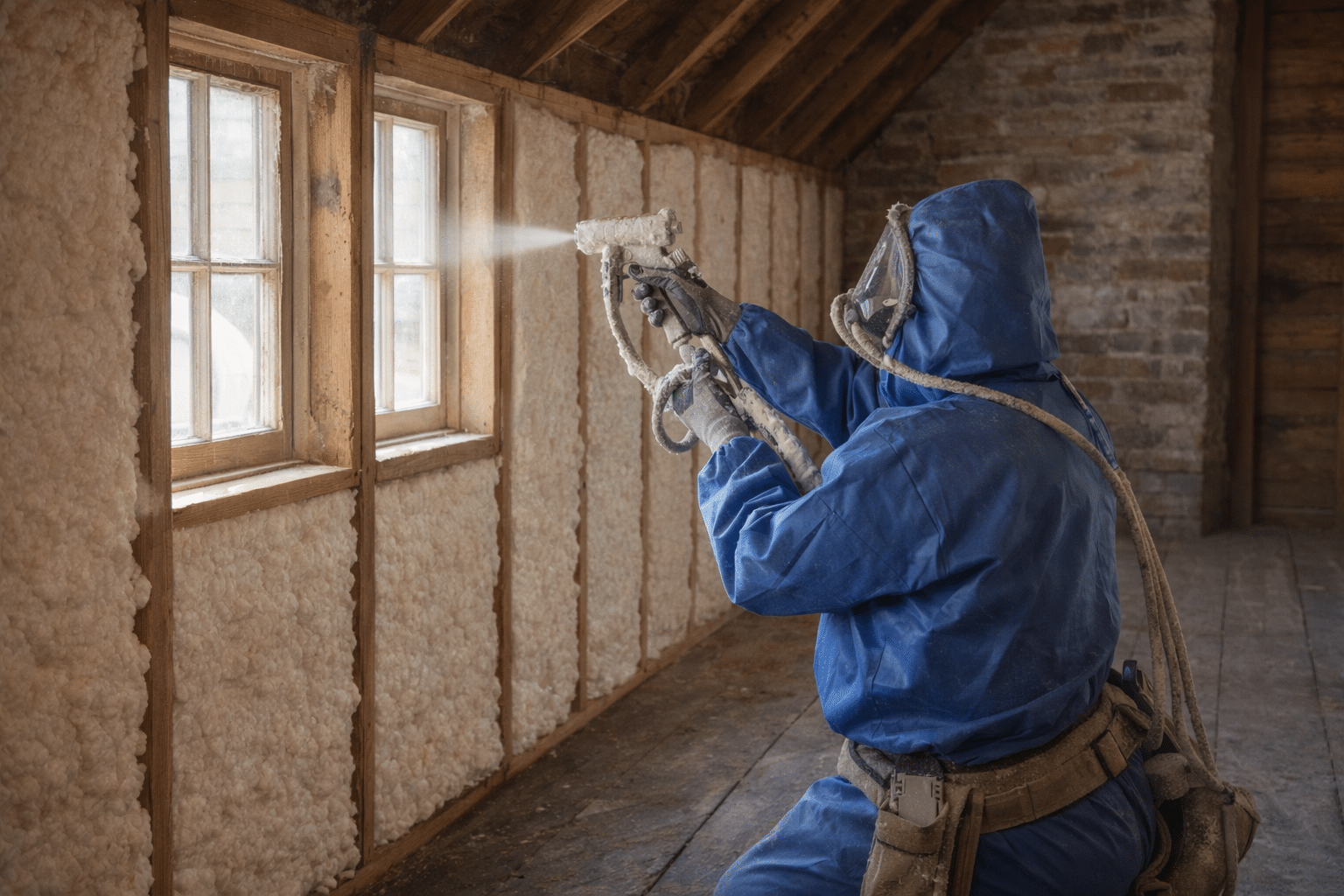
If you own an older property in Waterloo Region or Southern Ontario, you may have wondered what happens during an insulation inspection older homes process. For many homeowners, inspections feel like a formality before upgrades. In reality, they are a detailed diagnostic step that reveals how your home is performing.
A professional inspection focuses on identifying hidden inefficiencies that affect comfort and energy use. This includes everything from insulation breakdown to air movement through the structure. In many cases, solutions like spray foam insulation are recommended because they address both insulation and air sealing in one application.
Understanding what an inspection involves helps homeowners make informed decisions. Rather than guessing where problems exist, you gain a clear, evidence-based view of your home’s condition.
Why Insulation Inspections Matter in Older Homes
An insulation inspection older homes is especially important because older construction methods often lack modern air sealing and insulation standards. Materials degrade over time, and small gaps can develop into larger performance issues.
Many older homes were built without a complete understanding of how the building envelope should function. As a result, they are more likely to experience heat loss, inconsistent indoor temperatures, and reduced energy efficiency.
Over time, insulation can settle, shift, or become compressed. This reduces its effectiveness and creates uneven thermal coverage. Combined with aging materials, these changes contribute to ongoing comfort problems that are not always easy to identify.
An inspection helps uncover these issues before they become more costly problems. It also provides a clear picture of how well your home retains heat and manages airflow. Without this step, homeowners may invest in upgrades that do not fully address the root cause of discomfort.
What Professionals Look for in an Attic
The attic is one of the most critical areas evaluated during an insulation inspection older homes process. This is where heat loss is most likely to occur and where many hidden issues exist.
A thorough attic insulation inspection includes:
- Measuring insulation depth to ensure it meets current standards
- Identifying insulation gaps and uneven distribution
- Assessing ventilation and attic airflow patterns
- Checking for signs of moisture, condensation, or mold
- Locating air leakage pathways through the ceiling plane
Professionals often use thermal imaging to detect temperature differences that are not visible to the eye. This allows them to see exactly where insulation is underperforming or missing.
Air movement is another major focus. An air leaks inspection in the attic can reveal how warm air escapes through the top of the home, pulling in cooler outside air from lower levels. This continuous cycle affects both indoor comfort and heating efficiency.
Services like roof or attic insulation are designed to address these findings by improving insulation consistency and reducing uncontrolled airflow. In older homes, this step is often essential for restoring proper attic performance.
Common Issues Found During Inspections
An insulation inspection older homes often uncovers a range of issues that are not obvious during everyday living. These problems can exist for years without being noticed, yet still impact comfort and energy use.
Some of the most common home insulation problems include:
- Insulation that has become compressed or deteriorated
- Outdated materials that no longer meet performance standards
- Gaps around wiring, plumbing, and structural elements
- Inconsistent insulation coverage across the attic floor
- Poor sealing around attic hatches or access points
- Air leakage around recessed lighting and fixtures
These issues contribute to ongoing heat loss and make it harder to maintain stable indoor temperatures. In many cases, multiple small problems combine to create a noticeable decline in comfort.
An air leaks inspection also frequently identifies pathways where outside air enters the home. These leaks may be hidden behind drywall or within framing cavities, making them difficult to detect without professional tools.
Older homes are particularly prone to these issues because building practices at the time did not prioritize air sealing. As a result, addressing both insulation and airflow is necessary to improve overall performance.
How Inspections Identify Hidden Heat Loss
One of the key benefits of an insulation inspection older homes process is the ability to detect hidden heat loss. Much of this loss occurs in areas that are not visible or easily accessible.
Thermal imaging is a valuable tool in this process. It highlights temperature variations across surfaces, revealing where heat is escaping and where cold air is entering. This allows professionals to pinpoint exact problem areas rather than relying on assumptions.
Through this process, inspectors can identify:
- Insulation gaps behind finished walls and ceilings
- Weak points in the building envelope
- Areas where insulation has settled or shifted
- Air leakage around structural connections and penetrations
This detailed approach provides a more complete understanding of your home’s performance. Instead of treating symptoms, it focuses on identifying root causes.
For homeowners, this means recommendations are based on real data. It also ensures that any upgrades made will directly improve energy efficiency and comfort.
What Happens After an Inspection
Once the inspection is complete, homeowners receive a clear summary of the findings. This typically includes identified problem areas, explanations of how they affect performance, and recommendations for improvement.
The goal is not to push unnecessary upgrades. Instead, it is to prioritize the changes that will have the greatest impact on comfort, durability, and energy efficiency.
In many cases, improvements involve upgrading insulation in targeted areas and addressing air leakage at the same time. This is where modern solutions like spray foam insulation Ontario are often recommended.
Spray foam expands to fill cracks and voids, creating a more continuous seal within the building envelope. This helps reduce heat loss, limit air movement, and improve overall indoor comfort.
For older homes, this combined approach is often more effective than simply adding more traditional insulation. It addresses both the visible and hidden issues identified during the inspection.
If you are unsure how your home is performing, the next step is to have it evaluated by a professional. You can contact Reitzel Insulation to book an insulation inspection and receive a detailed assessment of your home. This process helps uncover hidden inefficiencies and provides a clear path toward improving comfort and energy performance.