
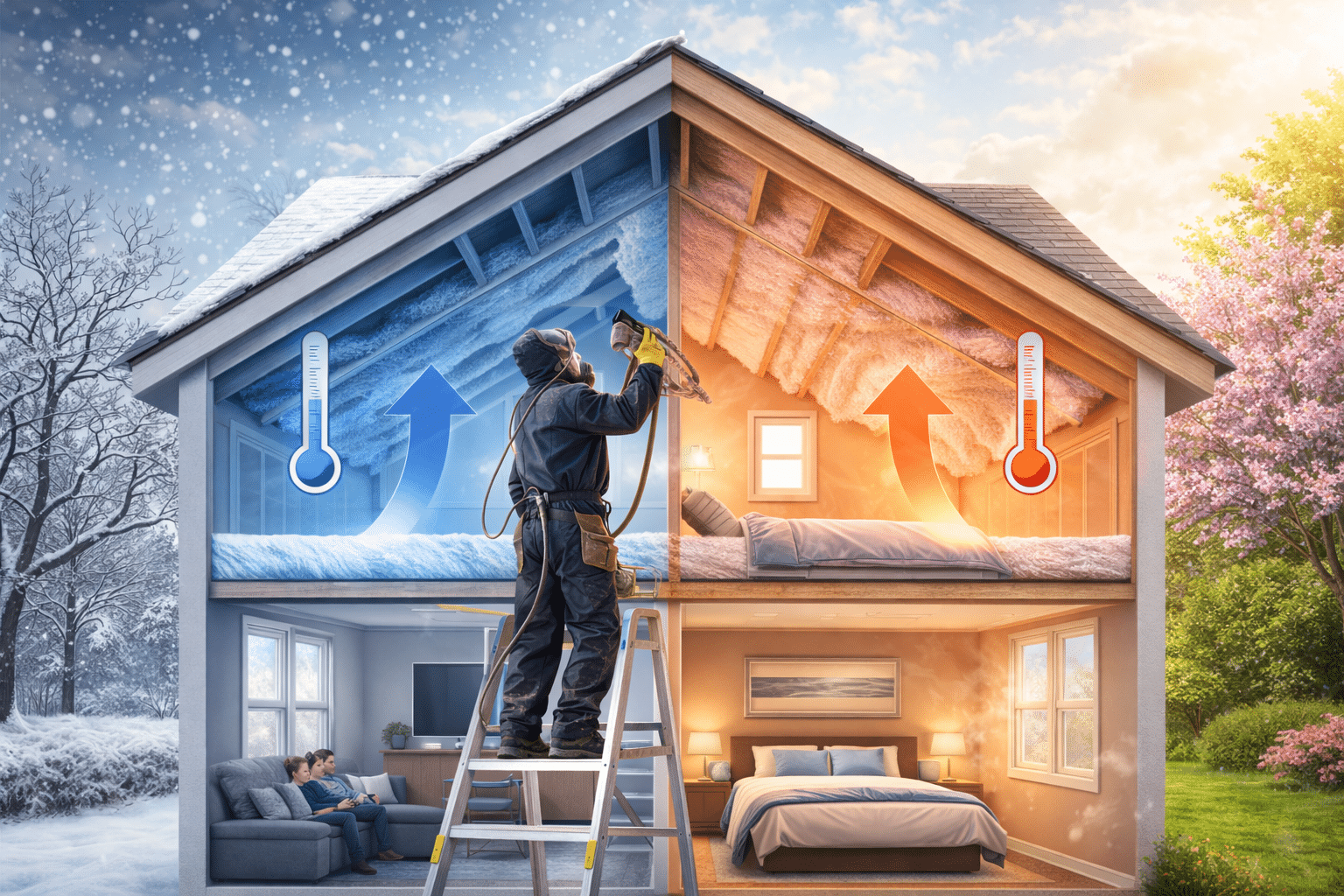
Spring in Waterloo Region and across Southern Ontario often brings dramatic weather changes. A warm afternoon can quickly turn into a cold evening, and overnight temperatures may drop close to freezing. These rapid shifts create what many homeowners experience as insulation spring temperature swings, where homes struggle to maintain consistent indoor comfort.
During this time of year, insulation plays an important role in stabilizing indoor conditions. Many homeowners exploring solutions like spray foam insulation discover that proper insulation helps protect their homes from sudden temperature fluctuations. Without adequate insulation, indoor temperatures may fluctuate almost as quickly as the weather outside.
Understanding how insulation works during Ontario’s spring weather can help homeowners maintain comfort, improve efficiency, and protect the long-term performance of their homes.
Why Spring Weather Is Hard on Homes
Ontario’s spring season is well known for unpredictable weather patterns. Days may reach mild temperatures, while nights drop significantly colder. These frequent Ontario seasonal temperature changes create ongoing pressure on the home’s thermal barrier.
The building envelope, which includes the roof, attic, walls, and insulation layers, must constantly adjust to changing outdoor conditions. When insulation is performing well, it helps slow the movement of heat between the indoors and outdoors.
However, spring also introduces freeze thaw cycles, where daytime warmth melts frost or snow before nighttime temperatures refreeze moisture again. These cycles can highlight areas where insulation is weaker or uneven.
When insulation is insufficient or degraded, insulation spring temperature swings inside the home become more noticeable. Rooms may heat up quickly during the day but cool rapidly at night. This constant fluctuation can make maintaining comfort more difficult.
Spring weather therefore acts as a kind of stress test for the home’s insulation system.
How Temperature Swings Affect Indoor Comfort
When outdoor temperatures change rapidly, the indoor environment naturally tries to follow those shifts unless the home has a strong thermal barrier. Effective insulation helps regulate how quickly these temperature changes affect the interior.
Homes experiencing insulation spring temperature swings often show signs such as uneven room temperatures, frequent thermostat adjustments, or heating systems cycling more often than usual.
Without proper insulation, heat gained during the day can escape quickly overnight. This type of seasonal heat loss forces heating systems to work harder, especially during colder evenings when temperatures drop suddenly.
Poor insulation can also affect home temperature stability. Some areas of the house may feel comfortable while others feel cooler or draftier. These inconsistencies often become more noticeable during spring because temperature swings occur daily.
Maintaining indoor temperature stability allows homes to remain comfortable even when outside conditions fluctuate significantly. This is one of the primary functions of a well-insulated attic and building envelope.
When insulation performs effectively, it slows the rate at which heat enters or leaves the home. As a result, the indoor environment changes more gradually, even during extreme insulation spring temperature swings.
Where Homes Typically Lose Heat During Seasonal Changes
During Ontario seasonal temperature changes, certain areas of the home are more vulnerable to heat loss. The attic is one of the most common locations where insulation weaknesses become visible.
Warm air naturally rises. When attic insulation is thin, uneven, or deteriorating, heat from the living space below can escape upward more easily. Over time, this can reduce attic insulation performance and increase heating demands.
Gaps or air leakage within the attic can also affect the home’s building envelope. These openings allow outdoor air to enter while conditioned air escapes, contributing to noticeable indoor temperature shifts.
Homeowners experiencing insulation spring temperature swings often discover that their attic insulation is no longer performing as effectively as it once did. Age, settling, or moisture exposure may gradually reduce insulation coverage.
Professional evaluations of roof or attic insulation can identify areas where insulation depth, coverage, or air sealing needs improvement. Addressing these areas helps restore consistent thermal protection throughout the home.
By improving attic insulation performance, homeowners can significantly reduce seasonal heat loss and maintain more stable indoor temperatures.
How Proper Insulation Stabilizes Indoor Temperatures
Effective insulation functions as a barrier that slows heat transfer. When insulation materials maintain proper thickness and coverage, they help regulate the movement of heat between indoor and outdoor environments.
This regulation is especially important during insulation spring temperature swings, when outdoor temperatures change rapidly. Insulation allows the home to maintain home temperature stability, even when weather conditions shift quickly.
Modern insulation systems can also improve air sealing. This helps reduce uncontrolled air movement through the building envelope and limits seasonal heat loss.
One example is spray foam insulation Ontario homeowners increasingly use to improve insulation performance. Spray foam expands during installation, filling gaps and sealing areas where air leaks might occur.
Because of this expansion, spray foam insulation Ontario installations often help strengthen the building envelope while supporting consistent attic insulation performance. The material can also contribute to improved indoor temperature stability across the entire home.
In many cases, upgrading insulation or addressing air leakage points can significantly reduce the impact of insulation spring temperature swings.
Why Spring Is a Good Time to Evaluate Insulation
Spring is often an ideal time for homeowners to assess insulation performance. The rapid Ontario seasonal temperature changes during this season tend to reveal insulation weaknesses that may not be noticeable during more stable weather.
For example, homeowners may notice that certain rooms cool quickly at night or that heating systems continue running longer than expected. These signs may indicate reduced attic insulation performance or gaps in the building envelope.
Evaluating insulation in the spring also allows homeowners to prepare for the upcoming summer season. Improving insulation before hotter weather arrives can help maintain comfort and reduce cooling demands.
Professionals can examine insulation coverage, identify areas of seasonal heat loss, and determine whether upgrades could improve performance. Many homeowners who experience insulation spring temperature swings discover that targeted improvements can significantly improve indoor comfort.
If your home has experienced noticeable temperature fluctuations this spring, it may be a good time to schedule a professional evaluation. Homeowners in Waterloo Region and Southern Ontario can contact Reitzel Insulation to book an insulation consultation before summer temperature changes begin and learn whether modern insulation solutions could help improve attic insulation performance and reduce seasonal heat loss.