
If you want to insulate an older home, you may assume the only option is to remove drywall, open the walls, and start a major renovation. In many cases, that level of demolition is not necessary. Some finished walls can be upgraded through a targeted insulation retrofit, depending on how the home was built and what is already inside the wall cavities.
For homeowners in Waterloo Region, Cambridge, Hamilton, Guelph, and across Southern Ontario, the first step is understanding the existing wall assembly. Before deciding how to insulate an older home, it is important to determine what insulation is already present, whether the cavities are accessible, and whether there are any moisture or construction concerns.
Why Older Homes Can Have Under Insulated Walls
Older Ontario homes were built across many different construction periods, and insulation practices have changed considerably over time. Some homes may have limited insulation in certain exterior walls, while others may have been partially or fully upgraded during previous renovations.
That means age alone does not prove that a home needs more insulation. One older house may still have original wall materials, while another of the same age may have received significant energy upgrades.
Possible signs of older home wall insulation concerns include cold exterior walls, uneven room temperatures, noticeable drafts, or rooms that are harder to heat or cool than the rest of the house. Higher heating and cooling demand can also raise questions about insulation performance, although insulation is only one factor that can affect home comfort and energy use.
If you are planning to insulate an older home, an assessment can help separate insulation problems from other issues such as air leakage or moisture.
Do You Have to Remove Drywall to Add Insulation?
Not always. It may be possible to insulate walls without removing drywall across an entire room.
The correct method depends on the existing wall assembly. The type of framing, condition of the cavities, existing insulation, previous renovations, moisture conditions, and available access can all affect what is practical.
For homeowners who want to insulate walls without removing drywall, the key distinction is between avoiding extensive demolition and avoiding all disruption. A retrofit method may still require small access openings so the wall cavities can be reached.
This is why an insulation assessment should come before selecting a specific method. The goal is to find an approach that improves the wall where appropriate without opening more of the finished interior than necessary.
How Drill and Fill Insulation Works
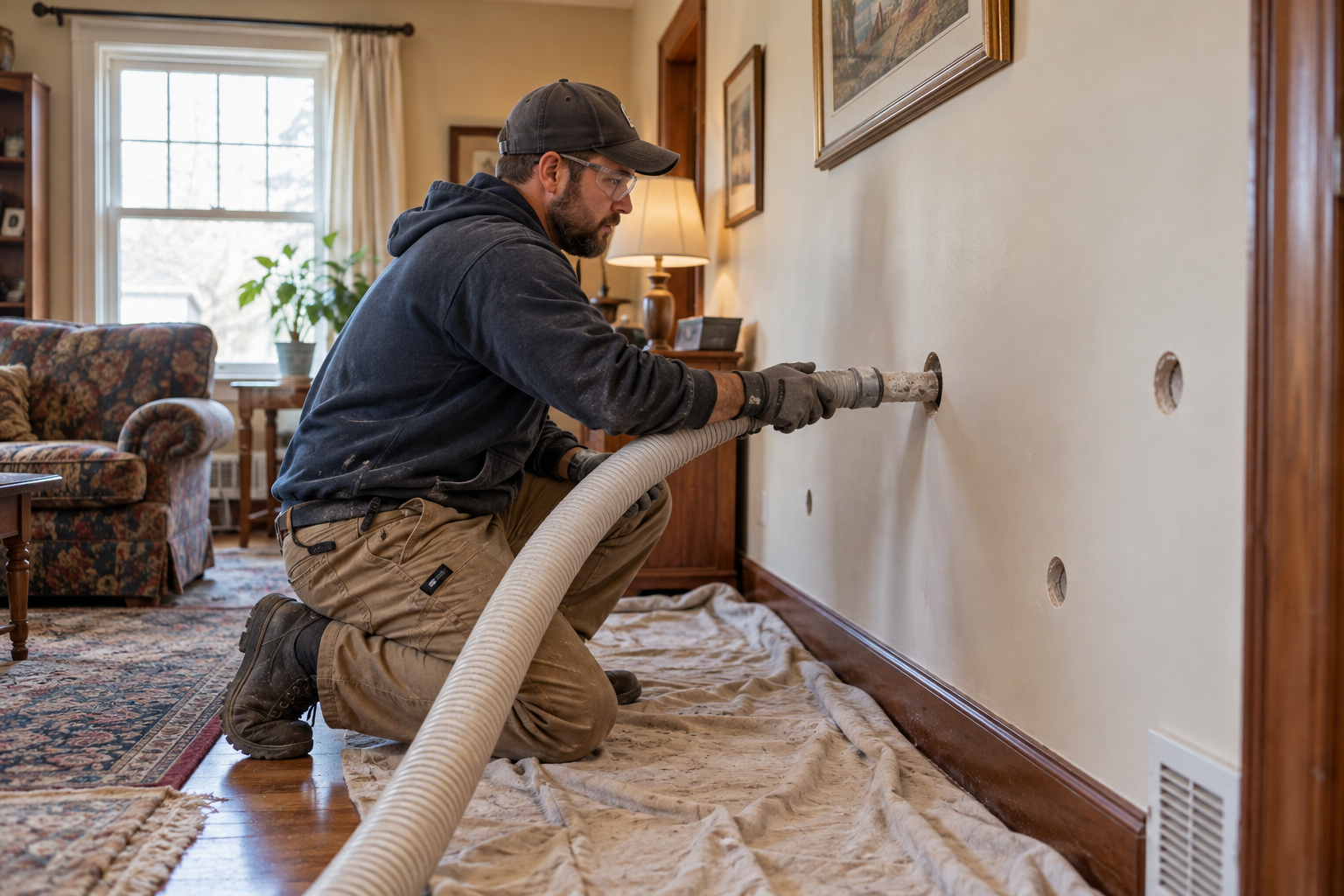
One option for older home wall insulation is drill and fill insulation. This method provides access to existing wall cavities through strategically placed openings rather than removing large sections of finished wall.
The general process is straightforward from a homeowner’s perspective. Small openings are created at selected locations, the wall cavities are accessed, suitable insulation is installed, and the openings are repaired as appropriate.
This can make drill and fill insulation useful when a homeowner wants to insulate an older home while preserving as much of the existing finished space as possible.
The process is still a retrofit, so some access is required. It should not be described as completely non-invasive. Its main advantage is that it may reduce the need for widespread drywall removal or a larger renovation when the wall construction is suitable.
When Drill and Fill Can Make Sense
Drill and fill can be worth considering when exterior walls are already finished and there is evidence that cavity insulation may be inadequate.
It may also be appropriate when homeowners want to insulate walls without removing drywall across entire rooms. Instead of turning the project into a full interior renovation, the work can sometimes be focused on the wall cavities that need attention.
Other situations may include targeted insulation retrofit projects, rooms with noticeable comfort issues, or older homes where previous upgrades did not address all exterior walls.
However, a suitable project depends on more than symptoms such as cold walls. Before using drill and fill insulation, the existing construction should be evaluated to confirm that the cavities can be accessed and that adding insulation is appropriate.
That diagnostic step is especially important when trying to insulate an older home. Buildings that appear similar from the outside can have very different wall assemblies because of construction era, additions, previous renovations, or earlier insulation work.
When Drill and Fill May Not Be the Right Solution
Drill and fill is not appropriate for every home or every wall.
Existing moisture problems are one reason to investigate further before adding insulation. Installing new material without understanding why moisture is present can leave the underlying issue unresolved.
Unusual wall construction can also affect whether the cavities can be reached effectively. Obstructions, fire blocking, old materials, previous renovations, or existing insulation can change what is possible within the wall.
In some homes, another insulation retrofit may be more appropriate. After the wall assembly has been assessed, spray foam insulation or another solution may be considered depending on the area being insulated and the conditions of the property.
The important point is that homeowners should not assume there is one universal method for older home wall insulation. The correct approach depends on the building.
Start by Finding Out What Is Inside the Walls
If you want to insulate an older home without gutting finished rooms, start by finding out what is already inside the walls.
An insulation assessment can help identify the existing insulation, cavity conditions, wall construction, and any concerns that should be addressed before work begins. That information can then guide the choice between drill and fill insulation and other retrofit options.
This approach also helps homeowners avoid unnecessary demolition. If a less-invasive insulation retrofit is suitable, the project can be planned around the existing finished walls instead of automatically treating wall removal as the first step.
For homeowners in Southern Ontario who want better comfort but are concerned about opening finished rooms, the goal should be to understand the wall first and choose the retrofit second.
Talk to Reitzel about insulation options for an older home before opening finished walls. An assessment can help determine whether drill and fill is appropriate for the specific property or whether another solution would make more sense.